A dirty vacuum filter can cut suction by 30% to 50%. If I have pets, kids, or a lot of foot traffic at home, I should check my filter every 2 to 4 weeks and wash it only if the filter is marked washable.
Here’s the short answer:
- Foam and felt filters: I wash them about every 1 to 2 months
- Busy homes with pets or kids: I check them every 2 to 4 weeks
- Washable HEPA filters: I clean them about every 1 to 3 months
- Paper, pleated, and most true HEPA filters: I do not wash them with water
- Drying time matters: I let washable filters air-dry for at least 24 hours
- If the filter is torn, warped, or still smells musty after drying: I replace it
The main thing is simple: I check the filter type first. Washing the wrong filter can damage it, and a clogged filter can mean weak pickup, more heat, and dust blowing back into the room.
| Filter type | Wash with water? | Usual timing |
|---|---|---|
| Foam | Yes | Every 1 to 2 months |
| Felt / cloth | Usually | Every 1 to 2 months |
| Washable HEPA | Sometimes | Every 1 to 3 months |
| Pleated paper | No | Replace when clogged |
| True HEPA | No | Replace per manual |
If I want my vacuum to keep working well, I clean washable filters on schedule, keep non-washable ones dry, and swap out any filter that looks damaged.
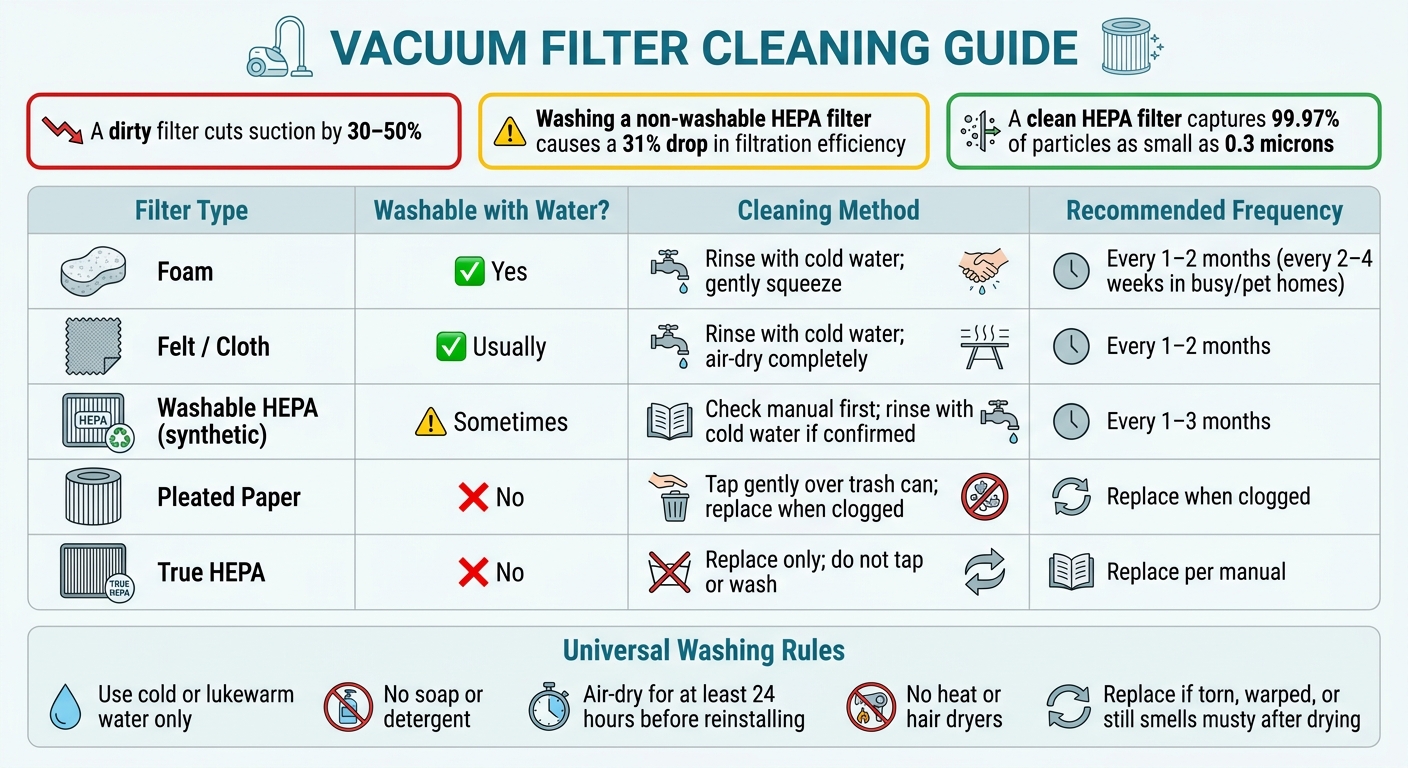
Vacuum Filter Cleaning Guide: Types, Frequency & Care by Filter
QUICKLY Clean Your SHARK Vacuum Filter in 2 Minutes!
sbb-itb-a8bcf38
Know your vacuum filter type before washing anything
First, figure out what kind of filter you have. That tells you if water is safe to use or if it’ll do more harm than good.
Some filter materials and water just don’t mix. So before you rinse anything, check the label on the filter or look in the owner’s manual. You can also use the model number on the vacuum label to confirm the filter type. If the filter looks like pleated paper, treat it as non-washable unless the manual says otherwise.
Washable filters: foam, felt, and some HEPA filters
Foam, felt, and cloth filters are usually made to handle water. Some washable HEPA-style filters can be rinsed too, but only if the label says they can.
When you clean a washable filter, use cold or lukewarm water. Skip detergent. Soap residue can stiffen foam and make it work less well. After rinsing, let the filter air-dry all the way before putting it back in. Reinstalling a damp filter can lead to mold and motor damage [3][8].
Non-washable filters: paper, pleated, and some HEPA filters
Don’t wash true HEPA filters unless the manual says they’re washable. Their tightly woven fibers can be damaged by water, which breaks down the filtration structure. Washing a non-washable HEPA filter can cause a 31% drop in filtration efficiency [9], which means more dust and allergens can slip through.
Pleated paper and cartridge filters have the same problem. Instead of washing them, tap them gently inside a trash can to knock loose dust, then replace them once they clog. And if you see a “permanent” label, don’t assume too much. It often means a washable synthetic filter, but you still need to check the manual [7].
Here’s a quick guide:
| Filter Type | Washable? | Cleaning Method |
|---|---|---|
| Foam | Yes | Rinse with cold water; gently squeeze |
| Felt / Cloth | Usually | Rinse with cold water; air-dry completely |
| Pleated Paper | No | Tap gently inside a trash can; replace when clogged |
| True HEPA | No | Replace only; tapping has limited effect |
| Washable HEPA (synthetic) | Sometimes | Check the manual; rinse with cold water if confirmed |
After you know the filter type, the next step is spotting clogging and wear.
How often to clean vacuum filters by type and home use
Start with foam and felt filters. They’re the most common washable option, and for many homes, they’re the ones that need attention first.
Foam and felt filters: usually every 1 to 2 months
In most busy homes, foam and felt filters should be washed every 1 to 2 months [1][2]. If your home gets heavier use, think daily vacuuming, shedding pets, or lots of dust and grit coming in from outside, it’s smart to check and rinse them every 2 to 4 weeks [1][6].
That shorter schedule can make a big difference. These filters clog faster than many people expect, especially when the vacuum is picking up hair, fine dust, and dirt day after day. Washable HEPA filters usually last a bit longer between cleanings.
Washable HEPA filters: usually every 1 to 3 months
Washable HEPA filters often need monthly washing in heavy-use homes or homes that deal with pet hair on a regular basis [8][5]. In lighter-use homes, such as one- or two-person households with no pets, cleaning them every 3 months is usually enough [1].
There’s one catch: repeated washing wears them down over time, so their lifespan gets shorter the more often they’re cleaned [8]. In plain English, you can wash them, but not forever.
Busy Long Island homes may need monthly or biweekly checks
Busy Nassau County homes often do better with monthly filter checks, while biweekly checks make more sense for homes with pets or lots of foot traffic. Seasonal pollen, fine dust, and tracked-in sand can clog filters faster [1][8].
After washing, let washable filters air-dry for at least 24 hours before putting them back in the vacuum. That helps prevent mold and odor [8][5][3]. If suction drops before your next planned cleaning, that’s a sign the filter may already be clogged or damaged.
Signs a vacuum filter needs washing or replacement
Loss of suction, weak pickup, or overheating
If your vacuum starts losing suction even though the bin is empty, the filter is one of the first things to check. When a filter gets clogged, airflow drops. That makes the motor work harder, and the extra strain often shows up as heat.
If the vacuum feels hotter than usual or shuts off in the middle of cleaning, that’s often the thermal shutoff doing its job. It kicks in when the motor is under too much stress [6][2].
You’ll usually notice these performance issues before the filter fails all the way. So if you’re due for a filter check, weak pickup, low suction, and overheating are clear signs that it may need a wash or a swap.
Gray buildup, trapped dust, tears, or a filter that no longer fits snugly
Take the filter out and give it a close look. A filter that needs washing often looks dark gray and clogged with dust deep in the fibers or pleats [6]. With pleated filters, hold the filter up to a bright light. If light can’t pass through the pleats, it’s too blocked for a simple tap-clean and needs a full wash or replacement [8].
Damage is a different story. If you spot rips, thin spots, or odd holes, the filter is done and should be replaced right away. The same goes for a filter that no longer sits flat or snug in its housing. If it doesn’t fit right, dust can slip around it instead of going through it [4][8].
A good rule of thumb: wash a dirty filter if it’s still intact. Replace it if it’s torn, warped, or still smells musty after it has fully dried.
Why regular filter care improves dust pickup and what to do next
Once you know when to wash a filter, the next step is understanding why that small job makes such a big difference.
A clean filter helps the vacuum keep strong airflow and steady suction. That means it can pick up more dust and hold onto it, instead of pushing some of it back into the room. When a filter gets clogged, airflow drops. And when airflow drops, dust pickup usually slips too. More dust and allergens can end up back in your living space.
That’s a big deal with HEPA filters. A clean HEPA filter captures 99.97% of particles as small as 0.3 microns [6][9]. A clogged one can’t do that job the same way.
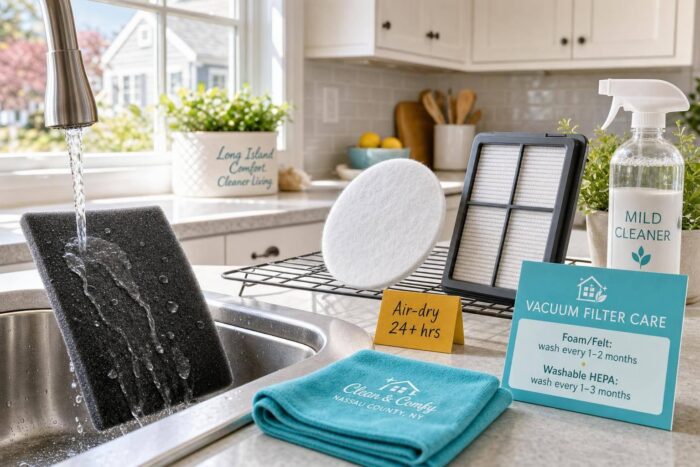
For washable filters, stick to the basics:
- Rinse with cold or lukewarm water
- Let the filter dry all the way through
- Reinstall it only when fully dry
- Skip soap, heat, and hair dryers
For non-washable filters, such as paper or pleated filters, don’t use water at all.
The main routine is pretty straightforward: figure out which filter type your vacuum uses, clean it on schedule, pay attention to suction loss or extra heat, and replace any filter that looks torn, warped, or still dirty after drying.
FAQs
How do I know if my filter is washable?
Check your vacuum’s owner’s manual or the manufacturer’s website first. That’s the best way to confirm if the filter can be washed.
Don’t assume water is safe. It can damage non-washable filters, including paper and electrostatic types. If you’re still not sure, look for a label that says washable or rinsable. If you don’t see that wording, treat the filter as disposable or dry-clean-only.
Can a dirty filter damage my vacuum?
Yes. A dirty or clogged filter can cut suction, send more dust and allergens back into your home, and force the motor to work harder. Over time, that extra strain can lead to overheating or even motor failure.
A few common signs tell you the filter needs attention:
- Weak pickup
- Overheating
- Odors
- Visible dust buildup
Check your vacuum manual before you clean anything. Some HEPA filters should not be washed unless they’re clearly labeled washable.
How often should I replace a vacuum filter?
Check your owner’s manual first. Replacement timing can vary based on the vacuum model and how often you use it.
As a general rule, pre-filters usually need to be replaced every 3 to 6 months, while main HEPA filters should be replaced every 6 to 12 months.
You may need to swap the filter earlier if you have:
- Pets
- Children
- Heavy foot traffic
It’s also time for a new filter if it stays discolored after washing, has tears or thin spots, smells musty, or your vacuum still loses suction after cleaning.