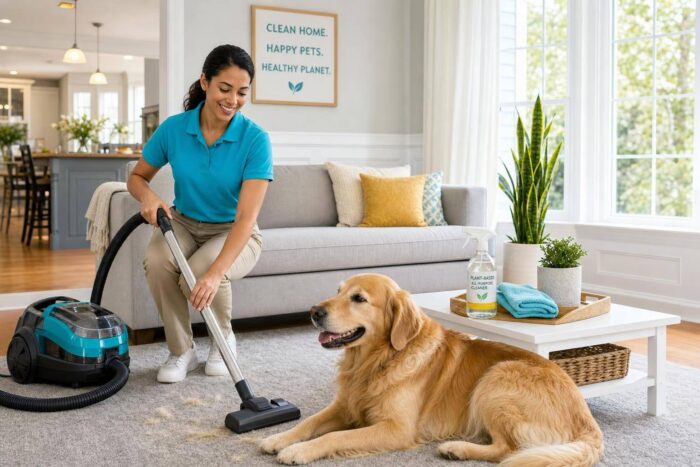
Pet hair is the part you can see. Dander is the part that keeps coming back. If I want a cleaner home without harsh sprays, the best plan is simple: use a sealed HEPA vacuum, damp microfiber, low-scent cleaners, hot-water laundry, and regular pet grooming.
Here’s the short version:
- Hair and dander need different cleaning steps. Hair sits on surfaces. Dander floats in air and settles deep into rugs, furniture, and vents.
- Dry sweeping can make things worse. It can send fine particles back into the air.
- Microfiber helps trap debris. It can also use up to 95% less water and cleaner than older mop setups.
- HEPA filtration matters. A sealed HEPA vacuum and a true HEPA air purifier help pull fine pet particles out of the home.
- Skip harsh products. Bleach, ammonia, strong scents, and many essential oils can irritate pets and people.
- Best low-tox options: diluted unscented castile soap, baking soda, and 3% hydrogen peroxide on hard nonporous surfaces.
- Surface matters. Hardwood needs low moisture. Rugs need deep vacuuming. Upholstery and pet beds need more frequent cleaning.
- If allergies, odors, or vent buildup keep coming back, routine cleaning may not be enough.
I’d sum it up this way: clean by lifting and removing, not by spreading dust around. Vacuum first, wipe with damp microfiber second, then deal with air, laundry, and grooming. That’s the core system.
The rest of the article explains where pet debris builds up, what tools to use, and how to clean each part of the home with less chemical load and less mess.
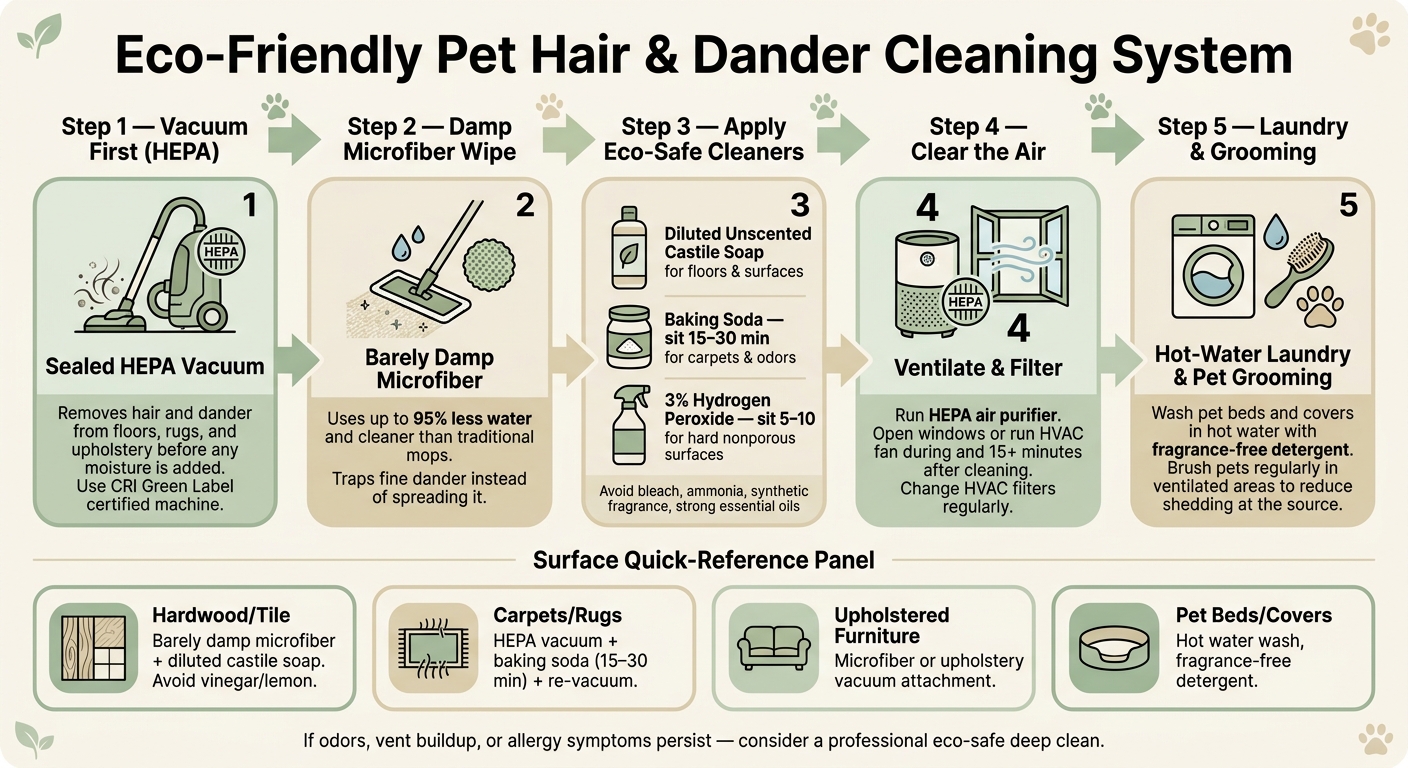
Eco-Friendly Pet Hair & Dander Cleaning System: Step-by-Step Guide
10 Simple Steps to Get Rid of Pet Dander
sbb-itb-a8bcf38
What pet hair and dander do inside your home
Pet hair is easy to spot and easy to vacuum. Dander is a different story. It’s made up of tiny skin flakes that drift through the air and work their way into fabric, vents, and other hard-to-reach spots. They can stay airborne for a while, then settle on furniture, bedding, and toys. That’s what makes buildup so tough to keep under control.
It also doesn’t stay in one room. Dander gets pulled into HVAC systems and sent back through the house when the system runs. So the method you use matters just as much as the surface you clean. For people with allergies or asthma, that can mean more irritation and breathing trouble [2].
Why dander is harder to control than fur
Fur is plain to see. Dander isn’t. Since those particles are so small, they settle across both hard and soft surfaces. That includes carpets and upholstery, but also bedding, toys, and floors. A standard sweep or a fast wipe-down often does more harm than good because it can push dander back into the air instead of taking it out.
That’s why capture-based cleaning matters. The goal isn’t just to move debris around. It’s to remove it without sending it airborne again. Dry sweeping and dry dusting often fall short here [1][4].
Where pet debris builds up in Nassau County homes

The heaviest buildup tends to show up in the same spots over and over. In Nassau County homes, it usually starts where pets rest, sleep, and hang out most. Hardwood floors, tile, and area rugs all collect hair and dander, but rugs tend to hold dander more stubbornly than hard surfaces. Upholstered furniture – especially couches and chairs with fabric cushions – also traps shed skin through daily contact.
Finished basements and dens need extra attention too. During hot summers and cold winters, pets often spend more time in these rooms. That can lead to faster dander buildup. On top of that, these spaces often have less airflow than upper floors, so allergens may hang around longer.
| Surface | Debris Risk | Why It Builds Up |
|---|---|---|
| Hardwood / Tile | High (visible hair) | Hair settles fast; dander clings to hard surfaces |
| Carpets / Area Rugs | Very High (trapped dander) | Fibers hold particles deep below the surface |
| Upholstered Furniture | High | Fabric traps shed skin from regular contact |
| Finished Basements / Dens | High (seasonal) | Lower airflow; pets spend more time there in hot and cold weather |
These trouble spots need low-toxicity tools that lift debris without tossing it back into the air. The next step is picking products and tools that trap what you remove instead of spreading it around.
Eco-safe cleaning basics for homes with pets
In homes with pets, "eco-friendly" needs to mean more than a label. It usually points to products that are plant-based, biodegradable, low-VOC, and fragrance-free. These are the kinds of cleaners that make the most sense for floors, rugs, and upholstery, where pet hair, dander, and oily buildup tend to pile up. The job is pretty simple: remove dander, oils, and other organic messes without leaving behind a sticky film that grabs even more hair, or putting chemicals into the air that can bother lungs and airways [3][5].
Just as important, there are a few things to leave out. Skip bleach, ammonia, synthetic fragrance, and strong essential oils. They can irritate pets’ airways and leave residue inside the home [2][1][7].
The everyday difference comes down to this: many standard cleaners leave a tacky residue and rely on harsh surfactants. Eco-safe options lean on plant-based ingredients and enzymes to lift organic matter without smearing it around [3][5].
Safer products and tools that get the job done
Start with the right product, then use the right motion. That helps keep dander on the cloth or in the vacuum instead of floating back into the air.
A small set of products can handle most pet hair and dander messes:
- Diluted unscented castile soap works well on floors and general surfaces [5].
- Baking soda helps absorb odors and gives you a mild scrub for stuck-on messes [5].
- 3% hydrogen peroxide can help break down organic residue on hard, nonporous surfaces. Just don’t mix it with vinegar in the same bottle, since that creates peracetic acid, a corrosive irritant [5].
For tools, microfiber cloths and mops do the heavy lifting. They trap particles instead of just pushing them around, and they use up to 95% less water and cleaning solution than old-style mops [6]. Add a sealed HEPA vacuum – ideally one with CRI Green Label certification – and you have a setup that removes dander by physically pulling it out of the space [4][6].
Cleaning methods that keep dander from going airborne
Once the tools are in place, the order of cleaning matters just as much. Vacuum before you mop. If you add moisture first, hair can clump into a muddy layer that’s much harder to clean up [1]. Use damp microfiber cloths instead of dry dusters, too, because dry dusting can send dander right back into the air [1][4]. If you’re using hydrogen peroxide or a citric acid solution, let it sit for 5–10 minutes before wiping so it has time to break down organic matter [5][4].
Ventilation matters more than people think. Run your HVAC fan or open a window while you clean and for at least 15 minutes after to help clear leftover vapors [4]. And keep pets away until the surfaces are dry. After that, it makes sense to match these basics to each surface.
How to clean each surface type for pet hair and dander
Use the same capture-first approach on every surface, then tweak the method based on what you’re cleaning.
Hard floors: microfiber and low-moisture cleaning
Start by vacuuming, then go over the floor with a barely damp microfiber mop [1][8][9]. That one-two combo helps pick up loose hair and fine dander without pushing it around.
On hardwood, skip vinegar and lemon. Acidic cleaners can dull the finish [5][9][10]. A highly diluted castile soap mix is a better fit here, and it helps to dry the floor right after mopping.
For tile or vinyl, a damp vinegar-and-water mix can work when needed [9][10].
Carpets and rugs: lift trapped hair without heavy fragrance
Carpets and rugs need a stronger first pass because they hold onto more hair and dander. Vacuum them well with a HEPA-certified machine, then sprinkle a light layer of baking soda over the room, let it sit for 15–30 minutes, and vacuum it up [5].
That extra step can help loosen what gets stuck deep in the fibers, without loading the room with heavy scents.
Furniture, bedding, and pet zones: tackle the main shedding spots
Upholstery tends to collect hair fast, especially in the spots where pets nap most. Start with a microfiber cloth or a vacuum upholstery attachment to pull up embedded hair [1][4].
For pet beds and removable covers, wash them in hot water with a fragrance-free, dye-free detergent when the care label allows [8].
How to lower airborne dander and know when to call for help
HEPA filtration, laundry, and grooming that cut allergen levels
After floors, rugs, and upholstery, the next job is dealing with what hangs around in the air.
Surface cleaning picks up the hair you can see. Airborne dander is different. It floats, settles, and then gets stirred up all over again. That’s where filtration and source control come in. True HEPA air purifiers trap fine dander that lingers in the air [11]. Regular HVAC filter changes also help stop dander from moving back through your home’s ventilation system [1]. And if you brush pets often in a ventilated area, you can cut shedding at the source [11].
Used together, HEPA filtration, hot-water laundry, and regular grooming do a lot to keep dander levels down.
When a professional eco-friendly deep clean makes sense
If dander keeps coming back after your usual cleaning, you’re no longer dealing with simple upkeep.
Persistent odors, buildup near vents, or allergy symptoms that keep getting worse are signs that routine cleaning isn’t doing enough [1][11]. Seasonal changes can also be a smart time for a deeper reset, especially if you’re getting a home ready for new tenants [1][11]. The same goes for homes with multiple pets, or for anyone whose allergy symptoms keep getting worse even with regular cleaning.
In those cases, a professional eco-safe deep clean can help reset the baseline. NLZ Cleaning Long Island serves Nassau County homes with eco-safe deep cleaning when buildup persists.
Conclusion: A steady eco-friendly routine that keeps pet mess under control
Routine filtration, laundry, and grooming control most dander. When buildup sticks around, a professional eco-friendly deep clean can help get things back under control.
FAQs
How often should I clean pet dander?
Clean pet dander on a set schedule instead of waiting until you can see it. A HEPA-filter vacuum helps pick up tiny particles that many standard vacuums leave behind.
Wash throw blankets and pillow covers every 1 to 6 weeks, based on how much your pet sheds. Then deep-vacuum mattresses and upholstered furniture every 3 months.
What cleaners are safest around pets?
The safest cleaners for pets are non-toxic, hypoallergenic, and free from harsh chemicals like bleach or ammonia. Good go-to options include baking soda, vinegar, and castile soap. They tend to work well for everyday cleaning, especially once the surface has been rinsed and is fully dry.
That said, “natural” doesn’t always mean safe. Tea tree oil, for example, can be toxic to pets. Citric acid can also bother sensitive paws, which matters if your dog or cat walks across the area right after cleaning.
Do air purifiers really help with dander?
Yes – air purifiers can help with pet dander, especially models with HEPA filtration. HEPA filters trap tiny particles like dander and pollen that many regular vacuums can miss.
That said, an air purifier works best as part of a bigger cleanup routine. Pair it with:
- dusting with microfiber cloths
- vacuuming with a HEPA-filter vacuum
That combo helps cut down allergens instead of sending them back into the air.