I’d start with a deep clean every 3–6 months for a Bayside home – or every 2–3 months if pets, children, or heavy foot traffic leave buildup behind. If routine cleaning no longer removes grease, soap scum, or floor residue, don’t wait for the next scheduled visit.
Here’s what I’d use to plan:
- Home layout: Focus on busy kitchens and bathrooms in condos; check entryways, stairs, and extra rooms in single-family homes.
- Seasonal allergens: Plan around spring pollen and an October clean before heating season. Between visits, vacuum, damp-dust, and wash bedding.
- Service scope: <u>Get a written checklist and final price</u>, including appliance interiors, add-ons, and any building insurance requirements.
Cleaning removes buildup – not moisture problems or HVAC faults. I’d address those separately and choose the next cleaning date based on what’s collecting in your home.
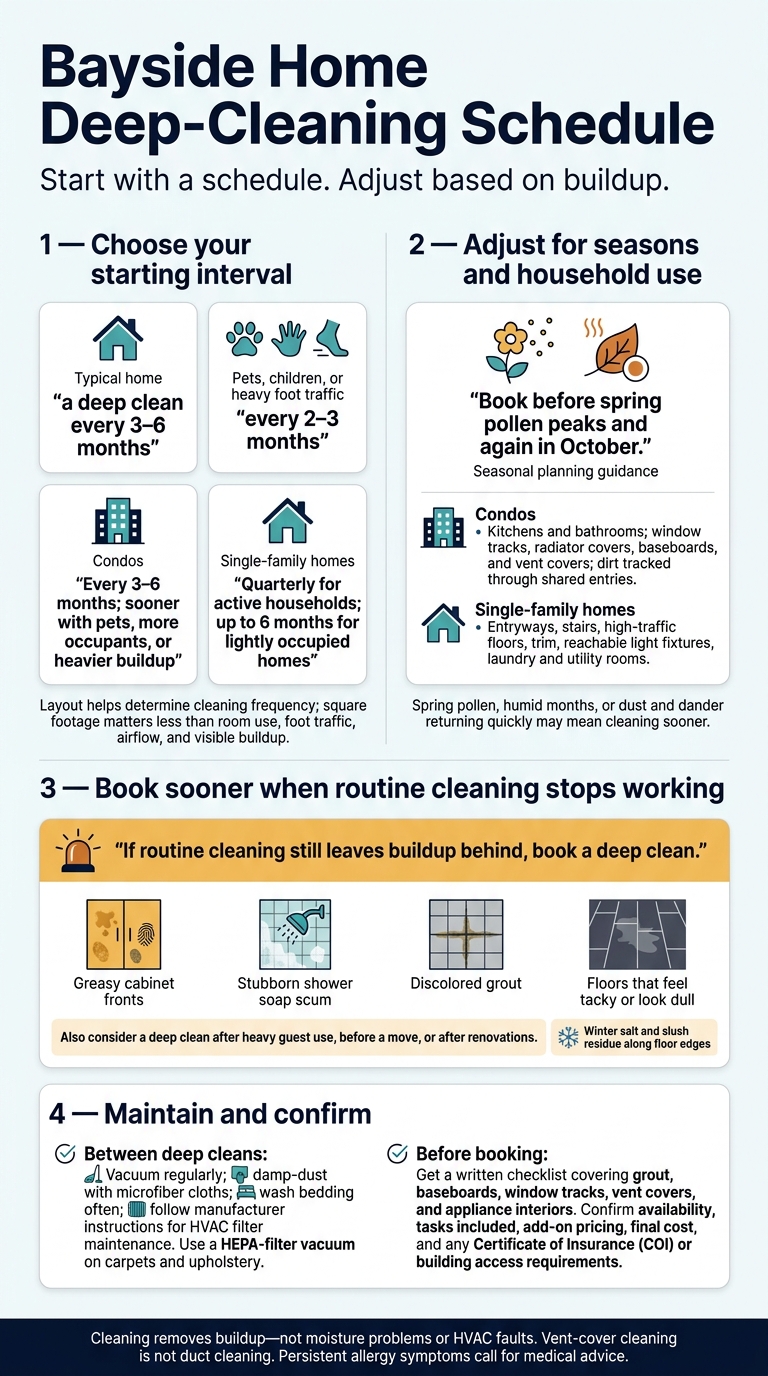
Bayside Home Deep-Cleaning Schedule
How often should you actually be cleaning these
sbb-itb-a8bcf38
Do Condos and Single-Family Homes Need Different Cleaning Schedules?
After pets, children, and household size, layout helps determine cleaning frequency. Square footage matters less than how rooms are used, foot traffic, airflow, and visible buildup [1][2][3].
| Factor | Bayside condos | Bayside single-family homes |
|---|---|---|
| Space and use | Heavy use of kitchens and bathrooms increases buildup | Multiple levels, extra bedrooms, and basements mean more surfaces to clean |
| Traffic | Dirt comes in through shared lobbies, elevators, and hallways | Outdoor debris travels through entryways and mudrooms, then onto stairs |
| Overlooked areas | Grease, grout residue, and dust in window tracks, radiator covers, baseboards, and vent covers can mean cleaning sooner | Dirt in entryways, on stairs, and on busy floors, plus dust on trim, reachable light fixtures, and in laundry and utility rooms, can mean cleaning sooner |
| Suggested timing | Every 3–6 months; sooner with pets, more occupants, or heavier buildup | Quarterly for active households; up to 6 months for lightly occupied homes |
Which Condo Areas Need Extra Attention?
Start with kitchens and bathrooms. Grease near the stove and residue on tile tend to build up fastest.
Limited airflow lets dust collect faster on radiator covers, baseboards, and vent covers. Window tracks trap dirt, too, while shared hallways bring more dirt onto indoor floors.
Schedule cleaning sooner if these areas stay dirty between visits, especially with pets or more people at home. In single-family homes, the focus shifts from shared-entry dirt to more surfaces across more levels.
Which Single-Family Home Areas Need Extra Attention?
Quarterly cleaning suits active households, while lightly used homes can go up to six months between cleanings.
Entryways, stairs, and high-traffic floors collect debris tracked in from outside. Trim, reachable light fixtures, and laundry and utility rooms also gather dust that routine cleaning can miss.
How Should Allergy Seasons Affect Cleaning Timing?
Household traffic isn’t the only factor in cleaning frequency. Seasonal allergens can mean you need to clean more often. Book before spring pollen peaks and again in October, before heating season begins and you spend more time indoors, to help keep buildup in check. [1][3][4]
Where Do Dust, Pollen, and Pet Dander Build Up?
Dust and dander can collect on ceiling fans, carpets, upholstery, bedding, and mattress surfaces. Include baseboards, window tracks, and vent registers in your seasonal clean. Use a HEPA-filter vacuum on carpets and upholstery to pick up fine particles. [1][4]
Cleaning vent covers doesn’t clean the inside of your ducts. Duct cleaning is a separate service. [1]
What Should You Clean Between Deep Cleans?
Vacuum regularly, damp-dust with microfiber cloths, and wash bedding often. Follow the manufacturer’s instructions for HVAC filter maintenance. [1][4]
If dust or dander comes back quickly, schedule deep cleans closer together. Persistent symptoms call for medical advice, not more cleaning. [1]
When Is Routine Cleaning No Longer Enough?
If routine cleaning still leaves buildup behind, book a deep clean. Watch for greasy cabinet fronts, stubborn shower soap scum, discolored grout, and floors that feel tacky or look dull.
In Bayside, tracked-in winter salt and slush can leave residue along floor edges that a quick mop misses. [4]
A deep clean also makes sense after heavy guest use, before a move, or after renovations. Before booking, check exactly what the service includes.
Which Deep-Cleaning Tasks Should You Confirm Before Booking?
Ask for a written checklist that covers grout, baseboards, window tracks, vent covers, and appliance interiors.
Keep cleaning and repairs separate. Cleaning can remove buildup, but it won’t fix the underlying cause.
Mold from moisture needs repairs and remediation; recurring dust associated with heating equipment may call for HVAC servicing.
If you live in a Bayside condo or co-op, check whether your building requires a Certificate of Insurance (COI) or has specific access rules.
How Can Bayside Residents Book a Deep Clean?
Once you’ve agreed on the scope, confirm the final price. NLZ Cleaning Long Island serves Bayside with standard, deep, and move-in/move-out cleaning. It offers flat-rate bedroom-and-bath pricing and the Make-It-Right Guarantee.
Before booking, confirm availability, the tasks included, add-on pricing, the final cost, and any COI requirements.
Conclusion: Choose a Schedule Based on Buildup
Start with a deep clean every three to six months. If buildup returns before the next cleaning, shorten the interval – especially when pets, children, heavy traffic, or allergies call for more frequent cleaning. [3][4]
Before choosing the next date, check behind furniture, radiators, the stove hood, and large appliances. Let what you find guide the timing rather than relying on the calendar alone. [1][4]
Spring pollen and humid months may mean cleaning sooner. [1][4] Schedule your next deep clean now, then confirm which tasks fit those conditions. [2]
FAQs
Can I deep clean busy rooms more often than the rest?
Yes, you can prioritize high-traffic areas like entryways, living rooms, and guest bathrooms. Dust, pet dander, and grime build up faster in these spaces, so focusing on them helps you get more for your money and keep your home healthier.
Many homeowners clean these busy rooms more often and schedule whole-home deep cleaning seasonally or quarterly.
How should I adjust deep cleaning for year-round allergies?
For year-round allergies, pair regular upkeep with targeted deep cleaning. If you’re highly sensitive, clean weekly or every two weeks to keep dust, dander, and pollen from building up. Schedule deep cleaning every three months for vents, upholstery, and hard-to-reach spots.
Let your cleaning provider know about your sensitivities so they can use HEPA-filter vacuums, eco-safe products, or fragrance-free options. Adjust your cleaning schedule during peak pollen seasons or when indoor symptoms get worse.
Does recurring buildup mean I need cleaning or repairs?
Recurring buildup usually means your cleaning routine isn’t reaching deeper, hard-to-reach spots – not that your home needs repairs. Deep cleaning tackles accumulated grime, grease, mineral deposits, dust, and allergens.
For many homes, a deep clean every 3–6 months works well. Consider quarterly cleaning if you have allergies, pets, or heavy foot traffic, and adjust the schedule during humid or pollen-heavy seasons. If buildup keeps returning despite regular upkeep, schedule a deep clean before assuming there’s structural damage.