Frameless shower doors are usually easier to wipe down. Framed doors need more cleaning around tracks, corners, and drainage holes. My starting routine for either style: squeegee after every shower, clean weekly, and check seals monthly.
The difference is where the work happens – not whether you can skip it.
Quick Comparison
| Care task | Frameless doors | Framed doors |
|---|---|---|
| Glass and water spots | Broad glass makes spots easy to see | Glass still spots; frames can hide residue |
| Detail cleaning | Hinges, handles, brackets, and seals | Frames, channels, corners, and seals |
| Tracks and drainage | Sliding models still need track and guide care | Sliding tracks and drainage holes need regular cleaning |
| Cleaning time | Usually easier to reach and wipe | More edges and overlaps to clean |
| Repair checks | Sweeps, silicone, hardware, and leaks | Seals, caulk, standing water, and leaks |
For Nassau County homes, I’d weigh water conditions, ventilation, shower use, and panel access – not just frame type. Use cleaners approved for your glass coating and metal finish, and <u>never mix cleaning chemicals</u>. If you hire a cleaner, confirm that shower doors and detail cleaning are included. Persistent leaks or loose parts need repair, not another scrub.
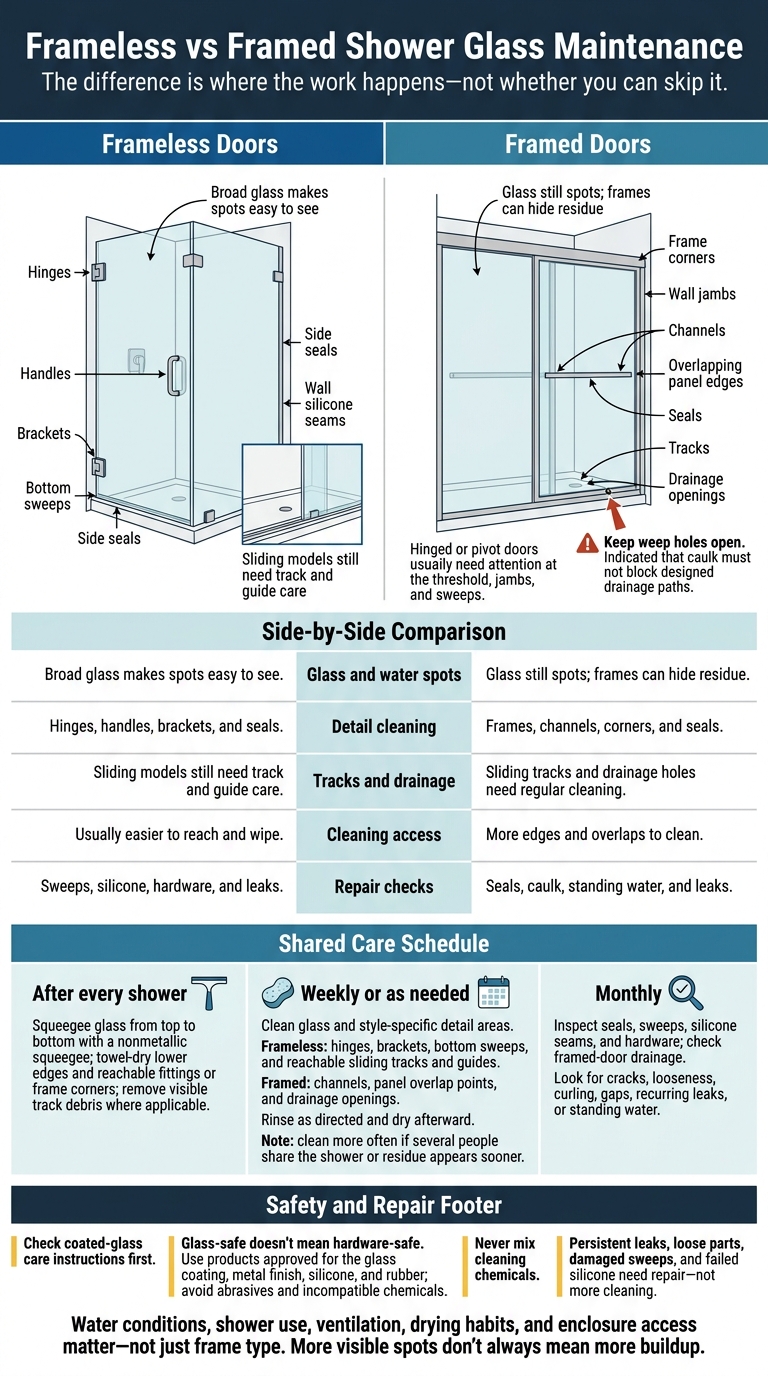
Frameless vs Framed Shower Glass Maintenance
The Best Way to Clean Glass Shower Doors!
sbb-itb-a8bcf38
Frameless Shower Doors: Glass, Hardware, and Seals
With fewer channels, hinged and sliding frameless enclosures are easier to clean. Most upkeep centers on exposed glass, hardware, and seals rather than track buildup. Frameless sliding doors still need track and guide care: brush out trapped hair and soap residue, then rinse and dry. Check rollers and guides for blockages, wear, or noisy movement.
Dry Glass to Reduce Water Spots
After each shower, run a nonmetallic squeegee from top to bottom, then towel-dry the lower edges. Wide glass shows water spots faster, especially with hard water or poor ventilation. Check coated-glass care instructions first. Abrasive pads and incompatible chemicals can damage the coating.
Clean and Dry Hinges, Handles, and Brackets
Use mild soap and warm water only if approved for the finish. Rinse and dry without soaking hinge joints. Glass-safe doesn’t mean hardware-safe. Avoid acids, bleach, ammonia, solvents, and abrasives unless specifically approved. To treat glass deposits, apply the approved product to a cloth instead of spraying near metal and seals.
Check Sweeps, Seals, and Silicone Joints
Inspect bottom sweeps, side seals, wall silicone seams, and hinge areas monthly. Look for cracks, looseness, curling, gaps, discoloration, or leaks that return to the same spot.
Film wipes off, but split seals, detached sweeps, and open silicone seams need repair or replacement. Don’t caulk over failed silicone; remove and replace it properly.
Framed doors shift that upkeep to tracks, metal edges, and drainage points.
Framed Shower Doors: Tracks, Metal Edges, and Drainage
Framed doors have corners, wall jambs, channels, and seals that frameless doors don’t. These extra parts give residue more places to collect. Sliding doors need track care, while hinged or pivot doors usually need attention at the threshold, jambs, and sweeps.
Clean Tracks and Clear Drainage Openings
Slide each panel open as far as its design allows. Remove loose debris, then scrub corners with warm water, a pH-neutral, manufacturer-approved cleaner, and a soft toothbrush. Rinse carefully and dry the parts of the threshold you can reach.
Don’t force tools into narrow channels or remove doors unless the manufacturer specifically permits it. Regular cleaning helps limit soap buildup, mildew, and drainage problems.
Keep weep holes open. Caulk can block these openings, trapping water or sending it onto the floor. Check drainage monthly. If water still pools after cleaning, look for leftover deposits or poorly applied sealant instead of adding more caulk.
Clean Metal Edges Without Damaging the Finish
Apply a finish-approved cleaner to a soft cloth, then wipe the frame. Rinse away residue and dry the corners. Even cleaners made for shower doors can damage aluminum if left on the surface.
Avoid metal scrapers and abrasive products. Once the frame is dry, check the seals and caulk.
Check Seals, Caulk, and Standing Water
Inspect bottom sweeps, magnetic seals where installed, jamb seals, and silicone seams monthly. Frames can direct water toward the threshold and hide buildup behind seals.
Loose seals, failed caulk, standing water, or leaks that persist after cleaning need repair – not more cleaning. Keep the door’s designed drainage paths open.
Frameless vs Framed: Cleaning Time and Water Spots
Frameless doors leave more glass and hardware exposed. Framed doors hide more buildup in tracks and channels. In Nassau County, water conditions, shower use, ventilation, and drying habits matter more than frame type.
The main cleaning difference isn’t the product you use. It’s where buildup collects – and how long it takes to reach and remove it.
| Maintenance factor | Frameless doors | Framed doors |
|---|---|---|
| Track buildup | Hinged doors usually have no full-length tracks; sliding models still need track care | Sliding tracks and drainage openings trap hair, soap scum, and minerals |
| Metal care | Clean and dry exposed hinges, handles, brackets, and clips | Clean and dry frames, rails, channels, and hardware |
| Seals | Check sweeps, seals, silicone joints, and wall connections | Check seals, frame joints, caulk, sweeps, and panel overlap points |
| Cleaning time | Easier access, but more exposed glass to wipe | Less exposed glass, but more channels and overlaps to clean |
| Spot visibility | Broad, exposed glass makes spots easy to see | Glass shows spots, while channels and frame edges can hide residue |
Water spots form when water evaporates and leaves minerals behind. More visible spots don’t always mean more buildup. Drying either style after use reduces what’s left on the surface.
After-Shower and Weekly Cleaning Tasks
Start with weekly cleaning, then clean more often if several people share the shower or residue appears sooner. Choose products that work with your glass coating, metal finish, silicone, and rubber. Rinse as directed and dry afterward. Never mix cleaning chemicals.
| Style-specific area | After each shower | Weekly or as needed |
|---|---|---|
| Frameless fittings and seals | Dry exposed fittings and reachable seal edges | Clean around hinges, brackets, and bottom sweeps |
| Framed edges and channels | Dry reachable frame corners and remove visible track debris | Clean channels, panel overlap points, and drainage openings |
| Frameless sliding tracks | Remove visible hair and debris | Clean reachable tracks and guides |
How Door Size and Layout Affect Cleaning
Door size and access can affect cleaning time more than the frame label. Overlapping panels, extra hardware, and hidden channels add work because they create more places to clean.
| Layout | Glass area and access | Detail-cleaning areas |
|---|---|---|
| Fixed frameless panel | Broad glass; open sides are accessible, but corners may be harder to reach | Bottom edge, clips, silicone, and wall or panel joints |
| Hinged frameless enclosure | Door size and swing clearance affect access to both faces | Hinges, handles, brackets, seals, and silicone joints |
| Framed sliding enclosure | Divided panels; overlapping edges limit access | Overlap points, rollers, guides, frame corners, drainage openings, and tracks |
Bathroom Cleaning Help in Nassau County
Nassau County homeowners can hire a local service for routine shower-glass cleaning, but check that the package includes shower doors before booking.[3] Ask whether it covers glass panels, edges, tracks, drainage openings, hardware, seals, and heavy mineral buildup. Share the manufacturer’s care instructions, and point out any coated glass or nearby stone.[2][4]
Cleaning removes surface buildup – not repair problems. Leaks, loose hardware, damaged sweeps, failed silicone, and alignment issues need repair, not more cleaning.
Conclusion: Choose Care That Fits Your Shower Door
Maintenance comes down to access and buildup. Frameless doors are easier to reach for cleaning, but they still need drying and seal checks. Framed doors need closer attention around tracks, edges, and drainage points.[8][7]
After each shower, use a squeegee and dry wet edges. Stick with finish-safe, non-abrasive cleaners, run the exhaust fan during and after bathing, and replace worn seals promptly.[1][5][6] For Nassau homeowners, the right care routine depends on shower use, drying habits, and enclosure layout. Choose the door you can clean and dry consistently.
FAQs
How can I tell mineral buildup from etched glass?
Try a touch-and-clean test. Mineral buildup usually feels slightly bumpy or textured and comes off with the right cleaners or mild abrasives. Etched glass, on the other hand, has permanent surface damage. It may feel smooth or scarred, but cleaning won’t remove it. If marks remain after professional treatment, the glass is likely etched.
For stubborn bathroom buildup in Nassau County, NLZ Cleaning Long Island offers professional deep cleaning services.
How do I clean between overlapping shower panels?
Wrap a microfiber cloth around a thin, non-abrasive tool, like a plastic spatula or clean ruler. Gently slide the wrapped tool between the overlapping panels to wipe away trapped moisture and soap scum. Avoid metal tools, which can scratch the glass.
Dry the gap thoroughly after each use to help prevent residue and mold buildup. If buildup remains, a maintenance professional can help sanitize these delicate spaces.
How can I tell if a shower seal needs replacing?
Check for water leaking out of the shower enclosure during use. Look for cracks, peeling, or brittleness in the seal, too. A musty smell that won’t go away or damp grout may also point to failed seals or caulk that need repair.