My starting point for fewer indoor allergens: remove dust weekly and keep humidity at 30%–50%. I use damp cloths, a sealed HEPA vacuum, and weekly bedding washes – not scented sprays – to help reduce exposure.
Here’s the routine I recommend:
- Trap dust: Clean from high surfaces down, then vacuum rugs and upholstery and damp-mop hard floors.
- Focus on fabrics: Use allergen-barrier bedding covers, wash bedding weekly, and clean pet areas. Keep pets out of bedrooms when possible.
- Stop moisture: Repair leaks, use exhaust fans, and dry wet materials within 24–48 hours when possible.
- Keep outdoor allergens outside: Remove shoes, clean entry mats, and keep windows closed during high-pollen periods.
- Check overlooked spots: In Nassau County, watch damp basements, window condensation, HVAC filters, and drainage after storms.
<u>Cleaning reduces exposure; it does not guarantee symptom relief.</u> I treat mold cleanup and routine cleaning as separate jobs and recommend qualified help for hidden mold, extensive water damage, or unsafe work.
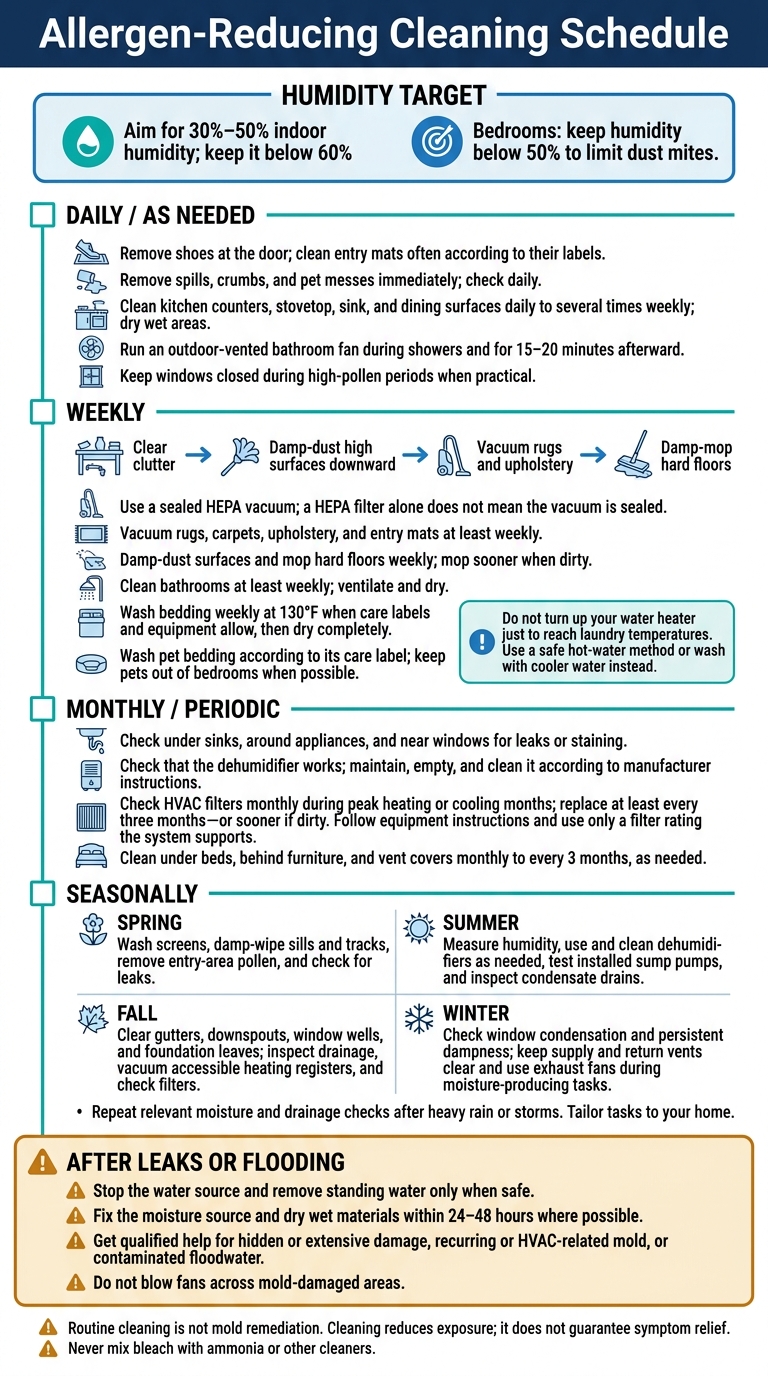
Allergen-Reducing Cleaning Schedule
Reduce Indoor Allergens and Asthma Triggers in Your Home
sbb-itb-a8bcf38
Set a Weekly Cleaning Routine
Start with the rooms you use most and work from high surfaces down to floors. Clear clutter, dust with a slightly damp microfiber cloth, then vacuum and mop. Open windows only when outdoor pollen counts and air pollution are low. People with asthma or severe allergies should skip dusty tasks or use respiratory protection recommended by a clinician.
Your tools matter: some hold onto dust, while others send it back into the air.
Choose Cleaning Tools and Products
Pick tools that trap dust, and follow the manufacturer’s instructions for filters, bags, and seals.
| Tool or product | Benefits | Limits | Best uses |
|---|---|---|---|
| Sealed HEPA vacuum | Traps fine dust and allergens | A HEPA filter alone does not mean the vacuum is sealed | Weekly cleaning of rugs, carpets, upholstery, mattresses, baseboards, and entry mats |
| Compatible double-layer microfilter bag | Helps hold fine dust and makes disposal more hygienic | Needs the correct fit and intact seals; does not make a vacuum sealed | Bagged vacuums used by people sensitive to dust |
| Standard vacuum | Handles basic cleanup | May leak fine particles | Quick cleanup when no high-filtration option is available |
| Microfiber cloth | Traps dust when slightly damp | Needs regular washing; avoid soaking surfaces | Shelves, furniture, blinds, trim, and surfaces safe for damp cleaning on electronics |
| Damp mop | Collects settled dust and tracked-in pollen | Does not replace vacuuming rugs or cleaning the mop head | Hard floors, especially kitchens, bathrooms, and entryways |
| Fragranced sprays or aerosol dusters | Add scent or temporary shine | Can irritate sensitive airways and spread dust | Avoid for allergen control |
Choose fragrance-free, low-residue products when possible. EPA Safer Choice identifies products that meet its ingredient, human-health, and environmental criteria. Its separate Fragrance-Free designation verifies that a product contains no fragrance materials or masking scents.[5][6][7] Air fresheners and disinfectants do not replace dust removal, damp cleaning, ventilation control, or filtration.
Schedule Floors, Surfaces, Kitchens, and Bathrooms
Give cleaning tasks a fixed weekly order. Clean more often if you have shedding pets, heavy foot traffic, or severe allergies. When practical, empty vacuum containers or replace bags outdoors, away from sensitive people. Do this before containers or bags overfill.
| Task | Frequency | Main target | Method |
|---|---|---|---|
| Remove spills, crumbs, and pet messes | Immediately; check daily | Food residue and tracked-in pollen | Scoop or blot, then clean |
| Clean kitchen counters, stovetop, sink, and dining surfaces | Daily to several times weekly | Crumbs, grease, moisture that supports mold, and pests | Damp-wipe after food preparation; dry wet areas |
| Vacuum rugs, carpets, upholstery, and entry mats | At least weekly | Dust, pollen, and pet dander | Vacuum slowly, including seams and edges |
| Damp-dust furniture, shelves, trim, and exposed surfaces | Weekly | Dust, pollen, and pet dander | Work downward, flipping to a clean side of the cloth as you go |
| Mop hard floors | Weekly; sooner when dirty | Dust, pollen, pet dander, and residue | Remove loose dust and debris first; use a well-wrung mop |
| Clean bathrooms | At least weekly | Dust and moisture that supports mold | Clean fixtures and floors; ventilate and dry |
| Clean under beds, behind furniture, and vent covers | Monthly to every 3 months, as needed | Hidden dust and pet dander | Use a brush attachment or damp cloth; do not blow dust |
Reduce Dust Mite Allergens in Bedrooms
Bedrooms need the most consistent care because bedding and fabric hold dust-mite allergens.
- Encase mattresses, box springs, and pillows in zippered allergen-barrier covers.[1][9]
- Wash bedding weekly at 130°F when care labels and equipment allow, then dry it completely.[1][8][9]
- Use dryer heat only when the care label allows it. Heat does not replace washing to remove allergens.[9]
- Cut down on clutter that holds dust, including stuffed toys and extra upholstered pieces.
- Vacuum mattress surfaces as part of bedding care.[9]
- Keep bedroom humidity below 50% to limit dust mites.[10]
Do not turn up your water heater just to reach laundry temperatures. Use a safe hot-water method or wash with cooler water instead.
Control Moisture and Pet Allergens
Moisture and pets can undo a week’s cleaning fast. Keep mold, dust mites, dander, and tracked-in pollen in check before allergens build up again.
Keep Indoor Humidity at 30%–50%
Place a digital hygrometer in basements, bathrooms, laundry rooms, and other damp spaces. Aim for 30%–50% indoor humidity, and keep it below 60%.[11][3]
Run an outdoor-vented bathroom fan during showers and for 15–20 minutes afterward. Use the range hood while cooking, vent the dryer outdoors, and maintain, empty, and clean dehumidifiers. During cold Long Island winters, lower humidity if condensation appears on windows, walls, or pipes. Check readings after storms, plumbing work, and long stretches of humid summer weather.
- Bathrooms: Damp grout or a musty smell calls for washing and drying hard surfaces, running the fan, and repairing failed caulk or plumbing.
- Basements: For condensation or damp concrete, safely remove standing water, dry surfaces, and store items off the floor. Inspect foundations, gutters, and sump systems. Discard porous materials that stay damp.
- Kitchens: Clean and dry wet sink cabinets, repair leaks, and use the range hood.
- Laundry areas: Dry damp floors, clean the lint filter and accessible vent area, inspect the duct, and vent the dryer outdoors. Don’t leave wet laundry in the washer.
- Windows: Wipe wet sills promptly. If you see moisture or peeling paint, improve ventilation and check seals and other possible paths for water entry.
If dampness persists, fix its source right away, before allergens spread.
Handle Leaks and Visible Mold
Unchecked moisture can lead to mold. Fix the moisture source first, then dry wet materials within 24–48 hours where possible.[11][12][14] After heavy rain, basement seepage, or a pipe leak, stop the water source and photograph the damage for insurance or contractor records. Remove standing water only when it’s safe. Don’t blow fans across mold-damaged areas.
For a small patch of mold on a washable hard surface, wear gloves, eye protection, and an N95 respirator. Scrub with detergent and water, then dry the surface completely.[12][16] Ventilate the area. Mold-damaged drywall, carpet padding, and other porous materials may need removal. Never mix bleach with ammonia or other cleaners.
Get a qualified assessment for larger, hidden, recurring, HVAC-related, or contaminated-floodwater problems. Keep people with asthma, severe allergies, or weakened immune systems away from cleanup. Don’t return to a contaminated area until it’s safe.
Routine cleaning is not mold remediation. Remediation also addresses moisture, containment, removal of damaged materials, and steps to prevent mold from returning.[11][12]
Once moisture is under control, turn to pet areas where dust and pollen collect.
Clean Pet Areas and Limit Tracked-In Pollen
Keep pets out of bedrooms and other frequently used rooms when possible, especially if residents have allergies. HEPA-vacuum pet areas, rugs, and upholstery regularly, and wash pet bedding according to its care label. Visible hair isn’t itself the allergen; allergen proteins come from dander, saliva, and urine.
During high-pollen periods, put washable mats inside and outside each main entrance. Remove shoes at the door, clean mats often according to their labels, and wipe pets’ paws and coats with a pet-safe damp cloth. Keep windows closed when practical, and use maintained HVAC filtration or a HEPA air cleaner.[13]
Plan Seasonal Cleaning in Nassau County
Follow a Seasonal Maintenance Checklist
Set aside spring and fall for detailed cleaning, and check filters, condensation, and leaks each month. These checks help catch moisture and dust before they build up. Tailor the work to your home – not every property has a basement, sump pump, or drainage problem. Repeat any relevant inspections after heavy rain or storms, since Nassau County flooding can happen year-round.[23]
| Season | Cleaning and upkeep |
|---|---|
| Spring | Wash screens, damp-wipe sills and tracks, remove pollen from entry areas, and check for leaks. |
| Summer | Measure humidity in basements and living areas, and run a dehumidifier as needed. Clean dehumidifiers per the manufacturer’s instructions, test installed sump pumps, and inspect condensate drains.[3][19] |
| Fall | Clear gutters, downspouts, window wells, and leaves along foundations. Inspect drainage routes after storms, vacuum accessible heating registers, and check filters before heating season starts. |
| Winter | Check windows for condensation and investigate persistent dampness around windows, roofs, or foundations. Keep supply and return vents clear, and run exhaust fans during tasks that produce moisture. |
Check HVAC filters monthly during peak heating or cooling months. Replace them at least every three months – or sooner if they’re dirty.[21] Follow equipment instructions and use only a filter rating your system supports.[20][22] Direct downspouts away from foundations by at least 5 feet, where site conditions and local requirements permit.[18] Hire qualified help for unsafe ladder or roof work.
After checking for moisture, turn to dust in spots that are easy to miss.
Clean Hidden Dust
During seasonal or post-move cleaning, work from top to bottom. Use suitable vacuum attachments on ceiling fans, light fixtures, furniture undersides, upholstered headboards, and rug edges. Then damp-wipe washable hard surfaces.
Clean curtains, blinds, window tracks, accessible laundry lint areas, and bathroom exhaust grilles according to their care instructions. Follow electrical-fixture instructions, and remove covers only if they’re designed for safe removal and reinstallation.
Cleaning a grille is not duct cleaning. Don’t put moisture into ducts or open sealed HVAC components. EPA does not recommend routine duct cleaning for every home; suspected contamination or persistent moisture calls for a qualified assessment.[4]
Address water damage before ordinary cleaning. If renovation dust may contain lead or asbestos, leave it undisturbed and use qualified remediation help.[17]
Plan Professional Deep or Move-Related Cleaning
If your home needs extra help after a move or seasonal buildup, local cleaning support can take on the detail work.
NLZ Cleaning Long Island – Nassau County’s Top-Rated Home Cleaning Service offers standard, deep, and move-in/move-out cleaning in Nassau County. Before booking, confirm the scope of work, vacuum filtration, and fragrance-free options.
Eco-friendly does not mean fragrance-free or low-irritation. Routine cleaning is not mold remediation and does not guarantee allergy relief.
Conclusion: Keep Your Cleaning Schedule Consistent
Keep your routine simple: remove dust before it spreads, control moisture, and clean every week. Wash bedding and pet bedding weekly, clean pet areas, and keep indoor humidity at 30%–50%.[12][11]
Use this checklist to stay on track.
| When | What to do |
|---|---|
| Daily | Leave shoes at the door, wipe up spills and pet messes, and run exhaust fans after tasks that produce moisture. |
| Weekly | Vacuum with HEPA filtration, damp-mop hard floors, dust from high surfaces down, and wash bedding and pet bedding.[1][2][26] |
| Monthly | Look for leaks or staining under sinks, around appliances, and near windows. Check HVAC filters and make sure your dehumidifier works. |
| Seasonally | Follow the seasonal checklist for screens, drainage, filters, and hidden dust. Check for moisture again after heavy rain or storms. |
| After leaks or flooding | Stop the source if it’s safe. Dry affected materials within 24–48 hours, and call a restoration or mold professional for hidden or extensive damage.[12] |
Consistency matters more than intensity. Follow product labels, never mix bleach with ammonia, and wear gloves and eye protection. Get qualified help for extensive mold, recurring contamination, or hidden water damage.[24][25]
Cleaning reduces exposure, but it doesn’t diagnose or treat allergies or asthma. Seek medical care if symptoms persist or worsen.[15][24]
FAQs
Why do my allergies flare up after cleaning?
Cleaning stirs up settled debris, sending allergens such as dust, mold spores, and pest droppings into the air you breathe [1]. This often happens when you move piles or clean areas that haven’t been touched in a long time. Stop immediately if you feel dizzy, nauseated, or short of breath [1].
If you need professional help in Nassau County, NLZ Cleaning Long Island offers deep cleaning to tackle built-up grime and allergens.
How can I tell if my cleaning routine is reducing allergens?
Pay attention to allergy symptoms at home. If sneezing, congestion, or breathing discomfort persists, your cleaning routine may not be removing enough allergens.
Check for visible dust and buildup along baseboards and in kitchens and bathrooms, too. Allergens can collect in these spots even after surface cleaning.
Which cleaning tasks matter most when I’m short on time?
Keep walkways, entryways, and stairways clutter-free so people can move safely and easily. Then focus on the kitchen and bathroom, where moisture, buildup, and hidden allergens can collect. Clean surfaces and shared spaces weekly or every other week to keep mess from piling up.
If your home has heavy grime or you have persistent allergy symptoms, start with a professional deep clean. Follow it with regular cleaning.