
If you want the short answer: hiring move-out cleaners can save hours, lower deposit risk, and make the final handoff less stressful. When deposits can reach $2,500+ and dirty appliances may cost $50 to $150 each, paying about $300 to $400 for a deep clean can make financial sense.
Here’s what I’d want to know right away:
- It saves time: pros often finish in 3 to 6 hours
- It lowers stress: you don’t have to deep-clean after packing and moving
- It catches missed spots: ovens, cabinets, grout, vents, baseboards, and window tracks
- It may help protect your deposit: cleaning issues are a common reason for deductions
- It leaves the place ready for the next person: tenant, buyer, or owner
A simple DIY cleanup often misses inspection spots. And that’s where charges can add up fast.
What Makes Move-Out Cleaning So Different? #deepcleaning #cleaning
sbb-itb-a8bcf38
Quick Comparison
| Factor | DIY Move-Out Cleaning | Professional Move-Out Cleaning |
|---|---|---|
| Time | 6 to 12+ hours, sometimes up to 2 days | 3 to 6 hours |
| Effort | High physical work | Low on your end |
| Missed areas | More likely | Less likely |
| Deposit risk | Higher | Lower |
| Upfront cost | Lower | About $300 to $400 |
If I were leaving a rental, I’d schedule the cleaning after the last box is out and before the final walkthrough.
Why Move-Out Cleaning Matters Before You Hand Over the Keys
Once the furniture is out, the place can feel almost unfamiliar. Suddenly, all the stuff that stayed hidden for months starts showing up: dust on high shelves, scuffs on baseboards, and grime inside drawers. That’s the difference between a basic cleanup and a move-out clean done with inspection in mind.
What a standard move-out cleaning checklist covers
A proper move-out clean hits the spots renters often miss.
| Area | Inspection-Critical Details |
|---|---|
| Kitchen | Tile grout, shower tracks, exhaust fan |
| Bathroom | Tile grout, shower tracks, exhaust fan |
| Bedrooms/Living Areas | Window tracks, inside closets |
| Whole Home | HVAC vents, high corners, wall scuffs |
Those tucked-away areas are a big reason a fast wipe-down usually doesn’t cut it.
Why a quick tidy-up is usually not enough
Basic household cleaners often can’t deal with years of grease inside an oven or mineral deposits stuck in bathroom grout. Professional tools do a better job of removing heavy grease and buildup than standard supplies you’d keep under the sink.
When a thorough clean is expected
A full move-out clean is usually expected in three common cases. End-of-lease turnover is the one most renters run into. Landlords tend to inspect the property closely, and if the cleaning falls short, they may take the cost out of your deposit.
It also matters before a home sale closes. Sellers usually need the property spotless for the buyer’s final walkthrough. And if a landlord is getting a rental ready for new tenants, a professional-level clean helps keep the property up to standard and can help support premium rents.
The best time to clean is after the home is empty and before the final inspection or key handoff. That timing can save time, lower stress, and help protect the handoff.
1. Saves Time During a Busy Move
Move-out cleaning goes way beyond a basic tidy-up. It’s a deep clean, and that means it takes a lot more time. The problem is, moving day already eats up most of your schedule.
A professional crew can clean an empty apartment or house in 3 to 6 hours [7][10]. Doing it yourself can take 2 to 3 days [7]. That gap is huge, especially when you’re already dealing with boxes, keys, paperwork, and a dozen last-minute tasks.
The biggest time drains are usually the spots people don’t clean in a normal week. Think ovens, cabinets, grout, and baseboards. Those jobs can turn a “quick cleanup” into hours of scrubbing.
Kitchens and bathrooms usually take the longest. Ovens, range hoods, cabinets, drawers, and grout all need heavy-duty cleaning. When you hand that work to a pro, you get time back for the moving tasks that need you.
2. Cuts Down on Moving Stress
Saving time also takes some of the pressure off move-out day. Moving is one of those life events that can drain you fast. You’re dealing with movers, paperwork, utility transfers, and a dozen loose ends at once. By the time cleaning comes up, most people are already wiped out.
Bringing in professionals takes one more job off your plate. Instead of trying to squeeze in a deep clean when your energy is gone, you can hand it to a trained crew. They work from a checklist that covers the spots landlords usually inspect first.
It also makes the final walkthrough feel less uncertain. If the unit isn’t clean, cleaning deductions can pile up fast [5]. Knowing a pro team took care of the job gives you more peace of mind when it’s time for inspection.
3. Gets Into Areas Most People Miss
Professional cleaners do more than save time. They get into the spots that DIY cleaning often skips.
Even if you’re careful, it’s easy to miss things during a move. You’re packing, handling paperwork, and trying to get out on time. That usually means some hidden areas get left behind.
The places inspectors often check most closely include the:
- oven, fridge, microwave, and dishwasher
- inside of cabinets and drawers
- light fixtures, ceiling fans, and exhaust fans
- window tracks, baseboards, grout, and caulk
An empty home makes this even more obvious. Once the furniture is gone, you can see the dust and grime behind and under appliances, along trim, and tucked into corners.
That stuff isn’t small. Dirty appliances can lead to deposit deductions of $50 to $150 per appliance [7]. So if the oven or fridge still has buildup, it can hit your refund fast.
Professional cleaners also use commercial degreasers and specialty tools that do a better job on stuck-on messes than standard household products. And when inspection day comes, those small missed details can make a direct difference in what you get back.
4. Helps You Get Your Security Deposit Back
Missed cleaning spots can turn into deposit deductions. If the place doesn’t meet move-out standards, your security deposit is on the line. In fact, cleaning problems are one of the most common reasons tenants lose part of their refund [8].
That’s why the math is pretty straightforward. Hiring a move-out cleaner often costs less than what a landlord might take from your deposit. Professional move-out cleaning for most standard homes usually costs $300 to $400 [9]. By comparison, landlords may deduct $200 to $500+ if the unit isn’t left in acceptable condition [5][9]. And pros know where these charges tend to come from, so they pay close attention to the spots that most often lead to deductions.
A few steps can help:
- Schedule the cleaning 1 to 2 days before your lease ends [9]
- Ask for a pre-move-out walkthrough [5]
- Check your lease for specific cleaning rules, like professional carpet cleaning or appliance cleaning [5][9]
It also helps to keep the receipt. A receipt from a professional cleaner shows that the home was professionally cleaned, which can give you proof if there’s a dispute over your deposit [5][9].
5. Leaves the Property Ready for the Next Occupant
A clean handoff matters. Whether the next person is a new tenant, a buyer, or a family getting a fresh start, they should walk into a space that feels actually clean, not just quickly wiped down. That makes turnover smoother for everyone.
A professional turnover clean goes past what you can see at a glance. It brings the home back to move-in-ready condition by removing buildup that basic cleaning often leaves behind. Cabinets, appliances, and fixtures get cleaned to handoff standards, so the next occupant can start unpacking instead of scrubbing first.
It also helps get rid of allergens, pet hair, and odors that don’t disappear with a mop and a spray bottle [1][6][9]. That extra buildup is removed, and the home is left smelling fresh.
For landlords and property managers, that level of detail helps a unit meet turnover standards. The result is a clean, ready-for-use space at move-out.
DIY vs. Professional Move-Out Cleaning at a Glance
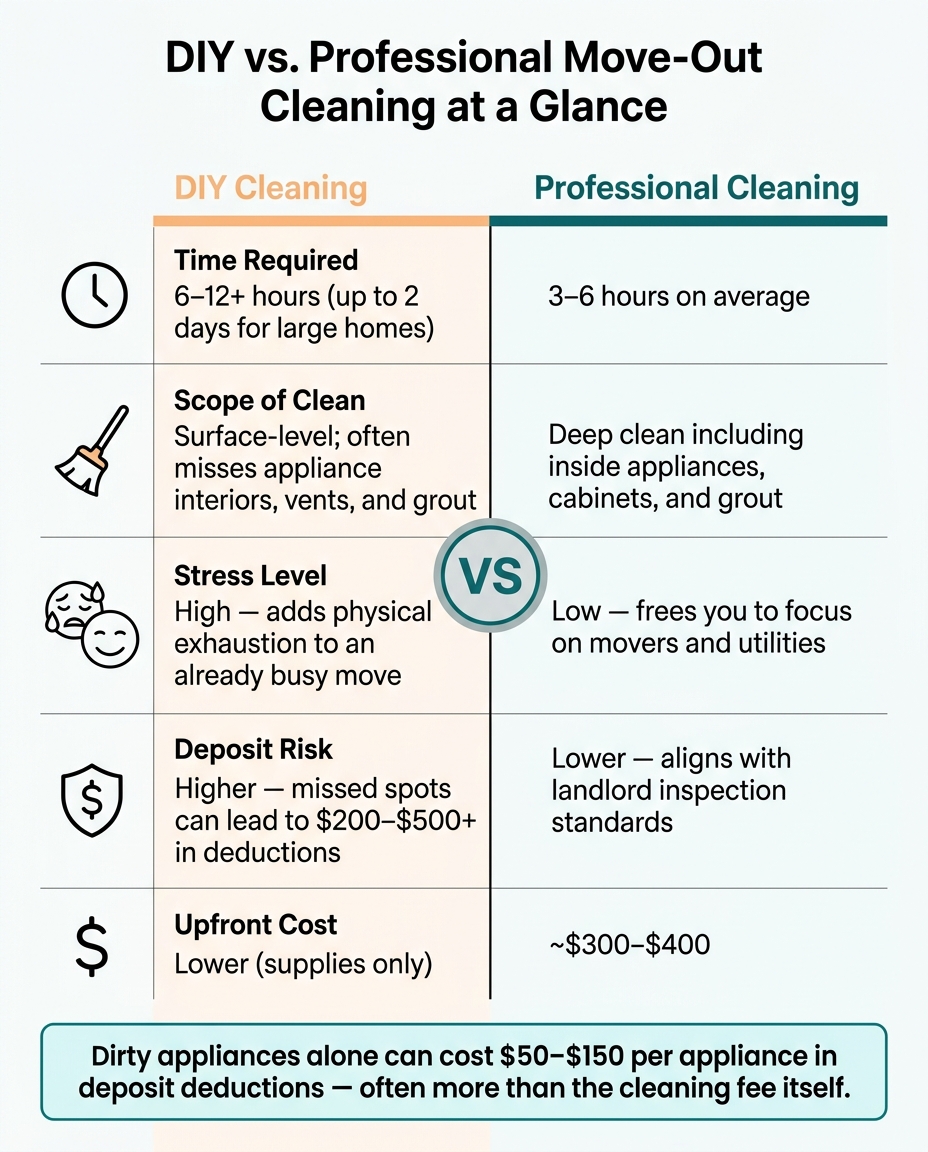
DIY vs. Professional Move-Out Cleaning: Cost, Time & Deposit Risk
After the five benefits, the choice comes down to time, risk, and results.
DIY move-out cleaning often takes 6 to 12+ hours. In larger homes, it can stretch to up to 2 days [5][6]. A professional crew usually wraps it up in 3 to 6 hours on average [2].
That side-by-side difference tells you a lot.
And price? The sticker cost is only one piece of the puzzle. If you miss built-up grime, grease, or problem spots, you could end up with deposit deductions that wipe out any money you hoped to save.
Quick comparison table
| Factor | DIY Move-Out Cleaning | Professional Move-Out Cleaning |
|---|---|---|
| Time Required | 6–12+ hours (up to 2 days for large homes) [5][6] | 3–6 hours on average [2] |
| Scope | Often surface-level; may miss appliance interiors, vents, and grout [1][6] | Deep clean; includes inside appliances, cabinets, and grout [2][4] |
| Stress Level | High; adds physical exhaustion to an already busy move | Low; lets you focus on logistics like movers and utilities [1][3] |
| Deposit-Risk Reduction | Lower; missed spots can lead to cleaning deductions | Higher; aligns with landlord inspection standards [6][2] |
| Consistency of Results | Variable; depends on tools, time, and energy | High; uses systematic checklists and commercial-grade equipment [2][4] |
One practical tip: schedule professional cleaning after all furniture and personal belongings have been removed, but before the final landlord walkthrough [5][4].
Conclusion
Those five benefits lead to one clear takeaway: professional move-out cleaning makes the handoff faster, easier, and cleaner. It saves time, cuts down on missed spots, and takes some of the stress out of the final handoff.
That matters even more when you compare the cleaning fee with possible deposit deductions. For many renters, the service costs less than what they might lose from the deposit.
Schedule the cleaning after the last box is out and before the walkthrough.
FAQs
What’s included in a move-out clean?
A move-out clean is a top-to-bottom cleaning of an empty property done to help meet landlord inspection standards. It goes beyond day-to-day cleaning by dealing with buildup and the spots people often skip.
It usually covers:
- appliance interiors, cabinets, and drawers
- bathroom fixtures, soap scum, tile grout, and caulk
- baseboards, window sills and tracks, light fixtures, ceiling fans, vents, and floors
When should I book move-out cleaning?
Book your move-out cleaning as soon as your moving date is set. That gives you a better shot at getting the time you want.
The best window is after all your stuff is out but before the final walkthrough or key handoff. Some companies can take last-minute or even same-day jobs, but it’s smart to book 3 to 5 days in advance if you can. It makes the whole move feel a lot less hectic.
Can cleaning help me avoid deposit deductions?
Yes. Professional cleaning can give you a much better shot at getting your full security deposit back. Landlords often deduct $200 to $500 or more when a place isn’t left in top condition.
That matters because the deduction can cost more than the cleaning itself. So hiring a company like NLZ Cleaning Long Island can be a smart move. And if there’s ever a dispute, a cleaning receipt may help support your case.